Eschatology
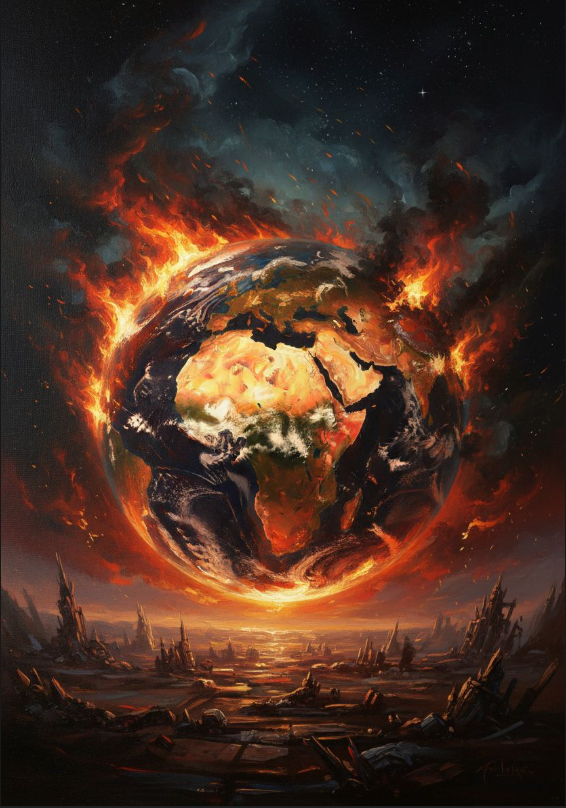
Eschatology is a term from theology that deals with the last things, the “end of the world,” or the “final state” of humanity and the universe. The term comes from the Greek words eschatos (“last” or “final”) and -logy from logos (“teaching” or “study”). Thus, eschatology is the study or doctrine of the end times, the consummation of world history, and the ultimate destiny of humankind.
1. Historical Background and Development
Eschatological ideas appear in many religions and philosophical systems—both in monotheistic faiths such as Judaism, Christianity, and Islam, and in polytheistic or non-theistic traditions. In the Western world, the Abrahamic religions have produced the most influential eschatological concepts.
In ancient Judaism, eschatological expectation was closely linked to the coming of the Messiah and the restoration of the “Kingdom of God.” These ideas were taken up by early Christians and developed within their own theology, focusing on Christ’s return and the Last Judgment.
In Islam, eschatology is also of central importance. The Qur’an speaks of the Day of Resurrection (Yawm al-Qiyama), the final judgment that will determine the fate of all people, as well as the coming of the Mahdi and the second coming of Jesus.
Other cultures and philosophies also contain eschatological themes—for example, the Buddhist concept of the end of the Dharma age or the Greek philosophical idea of cosmic cycles.
2. Main Themes of Eschatology
While eschatological teachings vary widely depending on religious and philosophical context, several key themes recur across traditions:
- The End of the World and History: In many eschatological systems, the end of the world is portrayed as an inevitable, predetermined event. Often, this end involves catastrophic upheavals—wars, natural disasters, or supernatural interventions. In Christian and Islamic eschatology, the end is tied to the return of a savior (Christ or the Mahdi) and the defeat of evil.
- The Last Judgment: This is a central theme in many religions, where humans are held accountable for their lives and actions before God or a higher power. In Christian and Islamic eschatology, this is the decisive moment when each person’s fate—eternal reward in heaven or punishment in hell—is determined.
- The Kingdom of God or the New World: Many traditions envision a “new heaven and new earth,” an ideal future following the destruction of the current world order. In Christianity, this is referred to as the “New Creation,” a redeemed world of peace and justice.
- Resurrection: The resurrection of the dead is a central theme in both Christian and Islamic eschatology, referring to the belief that the dead will be raised to life in a future age to face judgment. In Christianity, this is often linked to the return of Jesus Christ.
- Apocalyptic Visions: Many religious traditions contain apocalyptic texts or visions received by prophets or mystics. These writings often describe the end of the world in dramatic, symbolic imagery—such as the Book of Revelation in the Christian New Testament or the Hadith traditions in Islam.
3. Eschatology in Christianity
In Christianity, eschatology is a key area of theology focusing on Christ’s return, the Last Judgment, and eternal life. Christian eschatology often distinguishes between “historical eschatology” (events connected to Christ’s first coming) and “future eschatology” (events associated with His return at the end of time). Central themes include:
- The Second Coming of Christ: Christians believe that Jesus Christ will one day return in glory to defeat evil, raise the dead, and fulfill the Kingdom of God.
- The Last Judgment: After Christ’s return, all people will be judged according to their deeds—destined either for eternal life in heaven or punishment in hell.
- The Millennium: Some Christian denominations, especially millenarian ones, believe in a thousand-year reign of peace and justice before the final end of the world.
4. Eschatology in Islam
In Islam, eschatology is deeply rooted in the Qur’an and the Hadith. Key elements include:
- The Return of Jesus (ʿĪsā): Islam teaches that Jesus was not crucified but taken alive into heaven, and that he will return at the end of time to affirm the true faith and defeat evil.
- The Day of Resurrection (Yawm al-Qiyama): Similar to Christian belief, this is the day when every person will be judged for their deeds.
- The Mahdi: The Mahdi is a messianic figure expected to appear before the end of the world, restoring justice and righteousness.
5. Eschatology in Other Religions and Philosophies
- Judaism: In Judaism, eschatology centers on the coming of the Messiah, who will redeem Israel and usher in an era of peace and justice. The concept of final judgment exists, but the ideas of heaven and hell are less pronounced than in Christianity or Islam.
- Buddhism: Buddhism does not emphasize eschatology in the Western sense but includes the concept of the degeneration of the Dharma, followed by the coming of Maitreya, a future Buddha who will restore enlightenment and harmony.
- Hinduism: Hindu eschatology envisions cyclical ages (Yugas) in which the universe is repeatedly created and destroyed. The current age, Kali Yuga, is an era of decline that will end with cosmic renewal.
6. Modern Eschatology
In modern times, eschatological discourse has expanded beyond traditional religion. Secular and scientific perspectives also explore “end of the world” scenarios—such as the scientific theory of the universe’s “heat death,” where entropy leads to cosmic exhaustion. Apocalyptic themes also appear frequently in popular culture, from films and novels like Armageddon, The Road, and Mad Max, which imagine global catastrophe and survival in a post-apocalyptic world.
Conclusion
Eschatology is a profound and multifaceted field that addresses questions about the end of the world, humanity’s destiny, and the ultimate fate of the universe. Across traditions, eschatological thought reflects humanity’s deepest hopes, fears, and spiritual longings. It invites reflection on life, death, justice, and the ultimate purpose of existence.